
Ru  中文
中文
23.11.2026
ITER: 20 Years of International Cooperation, Scientific Discoveries, and Technological Excellence
November 21, 2026, marks the 20th anniversary of the signing of the agreement to establish the ITER Organization. Over two decades, this large-scale science and technology project has united the world's leading countries, thousands of scientists, engineers, and specialists from industrial enterprises. The common goal - researching the possibilities of controlled fusion and the prospects of using fusion energy - has become a stimulus for the development of science, the creation of unique technologies, and the strengthening of international industrial cooperation.
The history of ITER began long before the official establishment of the ITER Organization. In 1985, Academician Evgeny Velikhov proposed an initiative to unite international efforts to harness fusion energy.
The technological foundation of the project is the tokamak concept - a toroidal chamber with magnetic coils - developed by Soviet scientists in the 1950s. It is based on the principle of confining hot plasma using a magnetic field.
On November 21, 2006, in Paris, representatives of the European Union, China, India, Japan, the Republic of Korea, Russia, and the United States signed an intergovernmental agreement that established the framework for the joint implementation of ITER.
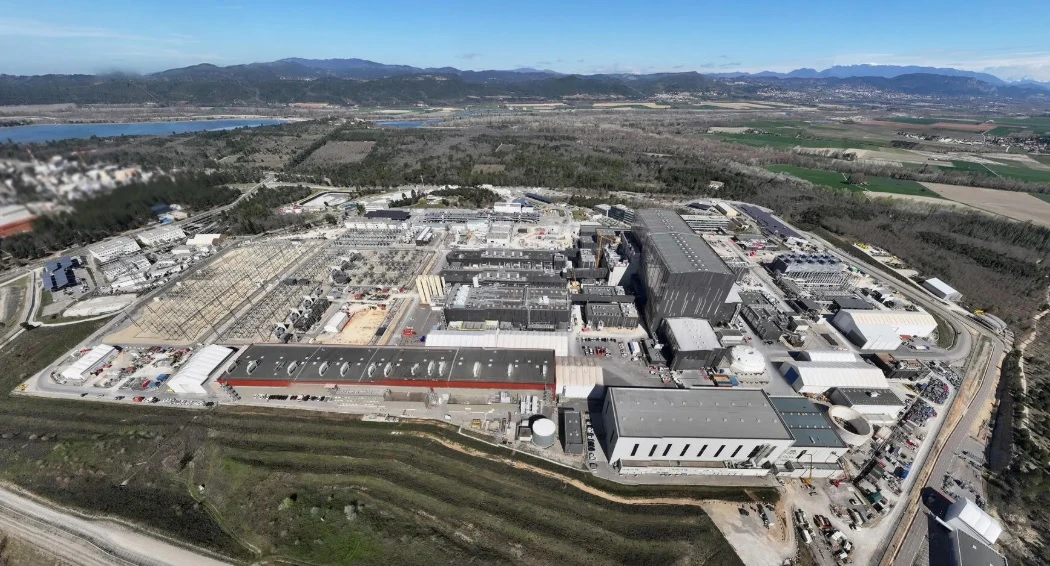
Today, this massive international scientific complex is being constructed in the south of France, in Cadarache, near Marseille. Its creation requires the integration of the scientific potential, engineering competencies, and manufacturing capabilities of the member countries.
A distinctive feature of ITER is its cooperation model itself: a significant portion of the members' contributions is made in-kind - through the development, manufacturing, and delivery of equipment, systems, and components. Thus, each country makes a direct contribution to the creation of this highly complex scientific facility.
ITER is designed to demonstrate the scientific and technological feasibility of using fusion energy for peaceful purposes.
Future research will involve studying the processes necessary to produce and sustain high-temperature plasma, as well as testing a range of highly complex technological solutions.
One of the key objectives of the project is to achieve an operating regime in which the generated fusion power will be at least ten times greater than the heating power injected into the plasma (500 MW of fusion power from 50 MW of input heating power).
Achieving these goals requires unique engineering solutions, special materials, complex control, diagnostic, heating, and cooling systems, as well as equipment capable of operating in extreme conditions.
The successful implementation of ITER will yield crucial scientific and technological results that will form the basis for the further development of energy based on controlled fusion.
Over twenty years, ITER has become not only an international scientific project but also a powerful catalyst for the development of high-tech manufacturing.
Creating equipment for ITER requires enterprises to master new technologies, improve manufacturing processes, modernize equipment, and develop testing infrastructure.
The project involves specialists from a wide variety of fields: scientists, designers, engineers, process engineers, and representatives of other professions.
Work on ITER components promotes the development of competencies in materials science, metallurgy, mechanical engineering, electrical engineering, vacuum technologies, and industrial quality control.
Moreover, many solutions created within the project have significance beyond its scope. The experience gained is in demand in scientific instrument making, medicine, energy, and the development of new research facilities.
Thus, ITER is forming not only the scientific basis for future research but also a technological foundation that will continue to drive the development of industry and science.
Russian scientific organizations and industrial enterprises are an integral part of the international ITER supply chain. Russian specialists are responsible for the development and delivery of 25 project systems. The domestic supply chain involves more than 50 scientific organizations and enterprises.
Russian specialists participate in the creation of superconducting and electrical systems, in-vessel components, equipment for additional plasma heating and diagnostics, vacuum vessel elements, test stands, and other critical components.
Fulfilling these tasks requires a high level of engineering training, manufacturing precision, and the ability to solve non-standard technological problems.
Participation in ITER contributes to the development of domestic manufacturing competencies, the training of qualified personnel, and the accumulation of experience in implementing the most complex science and technology projects.
NPO GKMP LLC is among the Russian enterprises participating in the implementation of the international ITER project.
One of the enterprise's areas of work is the development and manufacturing of specialized test stands for port plugs. These complex components are designed for integration into ITER and must undergo comprehensive testing before installation at the project site.
NPO GKMP LLC is supplying four test stands: three of them will be located at the ITER site, and the fourth is intended for the European Domestic Agency, Fusion for Energy. Each is designed to conduct the necessary tests on port plugs, verifying the components' readiness for further operation as part of the ITER machine.
One of the significant milestones of this work was the manufacturing of the vacuum test tank for Test Stand No. 4. After the completion of production and successful factory acceptance tests, the tank was delivered to the ITER site in Cadarache, France - its arrival was celebrated in November 2025. In 2026, the remaining systems of the stand were delivered to the site, and preparations for commissioning are currently underway.
This result is the product of many years of work by a large team of specialists at NPO GKMP LLC. Engineers, designers, process engineers, and quality assurance staff have solved the most complex tasks, developed new technological approaches, and improved manufacturing processes.
The implementation of the project required not only the manufacturing of equipment but also the mastery of unique quality control methods, the execution of complex tests, and the search for solutions to non-standard engineering challenges.
The Private Institution "Project Center ITER" played an important role in the implementation, development, design, and production of these test stands.
For NPO GKMP LLC, participation in the international project is an opportunity to apply accumulated engineering experience to solve world-class tasks, develop its own competencies, and make a concrete contribution to the creation of ITER.
Over two decades, ITER has united scientific schools, engineering teams, and industrial enterprises from different countries. Behind the scale of the project stand thousands of specialists whose work is aimed at achieving a common goal: expanding knowledge about fusion and exploring the prospects of new energy sources.
For NPO GKMP LLC, participation in the project has become an important chapter in the enterprise's history and a confirmation of the professional capabilities of the Russian engineering school.
We congratulate the ITER Organization, all project participants, scientists, engineers, and specialists on the 20th anniversary of the signing of the agreement on its creation!
We wish you the successful continuation of your work, new scientific discoveries, technological achievements, and the realization of all planned objectives.
We are proud to be part of a project that unites global efforts for the sake of scientific progress and the energy of the future.
ITER is an international project opening new horizons for science.
The history of ITER began long before the official establishment of the ITER Organization. In 1985, Academician Evgeny Velikhov proposed an initiative to unite international efforts to harness fusion energy.
The technological foundation of the project is the tokamak concept - a toroidal chamber with magnetic coils - developed by Soviet scientists in the 1950s. It is based on the principle of confining hot plasma using a magnetic field.
On November 21, 2006, in Paris, representatives of the European Union, China, India, Japan, the Republic of Korea, Russia, and the United States signed an intergovernmental agreement that established the framework for the joint implementation of ITER.
Today, this massive international scientific complex is being constructed in the south of France, in Cadarache, near Marseille. Its creation requires the integration of the scientific potential, engineering competencies, and manufacturing capabilities of the member countries.
A distinctive feature of ITER is its cooperation model itself: a significant portion of the members' contributions is made in-kind - through the development, manufacturing, and delivery of equipment, systems, and components. Thus, each country makes a direct contribution to the creation of this highly complex scientific facility.
The main goal of ITER is to demonstrate the scientific and technological feasibility of using fusion energy.
ITER is designed to demonstrate the scientific and technological feasibility of using fusion energy for peaceful purposes.
Future research will involve studying the processes necessary to produce and sustain high-temperature plasma, as well as testing a range of highly complex technological solutions.
One of the key objectives of the project is to achieve an operating regime in which the generated fusion power will be at least ten times greater than the heating power injected into the plasma (500 MW of fusion power from 50 MW of input heating power).
Achieving these goals requires unique engineering solutions, special materials, complex control, diagnostic, heating, and cooling systems, as well as equipment capable of operating in extreme conditions.
The successful implementation of ITER will yield crucial scientific and technological results that will form the basis for the further development of energy based on controlled fusion.
ITER is a driver for the development of science and industry.
Over twenty years, ITER has become not only an international scientific project but also a powerful catalyst for the development of high-tech manufacturing.
Creating equipment for ITER requires enterprises to master new technologies, improve manufacturing processes, modernize equipment, and develop testing infrastructure.
The project involves specialists from a wide variety of fields: scientists, designers, engineers, process engineers, and representatives of other professions.
Work on ITER components promotes the development of competencies in materials science, metallurgy, mechanical engineering, electrical engineering, vacuum technologies, and industrial quality control.
Moreover, many solutions created within the project have significance beyond its scope. The experience gained is in demand in scientific instrument making, medicine, energy, and the development of new research facilities.
Thus, ITER is forming not only the scientific basis for future research but also a technological foundation that will continue to drive the development of industry and science.
Russia's contribution to the international ITER project.
Russian scientific organizations and industrial enterprises are an integral part of the international ITER supply chain. Russian specialists are responsible for the development and delivery of 25 project systems. The domestic supply chain involves more than 50 scientific organizations and enterprises.
Russian specialists participate in the creation of superconducting and electrical systems, in-vessel components, equipment for additional plasma heating and diagnostics, vacuum vessel elements, test stands, and other critical components.
Fulfilling these tasks requires a high level of engineering training, manufacturing precision, and the ability to solve non-standard technological problems.
Participation in ITER contributes to the development of domestic manufacturing competencies, the training of qualified personnel, and the accumulation of experience in implementing the most complex science and technology projects.
NPO GKMP LLC - Contributing to the creation of equipment for ITER.
NPO GKMP LLC is among the Russian enterprises participating in the implementation of the international ITER project.
One of the enterprise's areas of work is the development and manufacturing of specialized test stands for port plugs. These complex components are designed for integration into ITER and must undergo comprehensive testing before installation at the project site.
NPO GKMP LLC is supplying four test stands: three of them will be located at the ITER site, and the fourth is intended for the European Domestic Agency, Fusion for Energy. Each is designed to conduct the necessary tests on port plugs, verifying the components' readiness for further operation as part of the ITER machine.
One of the significant milestones of this work was the manufacturing of the vacuum test tank for Test Stand No. 4. After the completion of production and successful factory acceptance tests, the tank was delivered to the ITER site in Cadarache, France - its arrival was celebrated in November 2025. In 2026, the remaining systems of the stand were delivered to the site, and preparations for commissioning are currently underway.
This result is the product of many years of work by a large team of specialists at NPO GKMP LLC. Engineers, designers, process engineers, and quality assurance staff have solved the most complex tasks, developed new technological approaches, and improved manufacturing processes.
The implementation of the project required not only the manufacturing of equipment but also the mastery of unique quality control methods, the execution of complex tests, and the search for solutions to non-standard engineering challenges.
The Private Institution "Project Center ITER" played an important role in the implementation, development, design, and production of these test stands.
For NPO GKMP LLC, participation in the international project is an opportunity to apply accumulated engineering experience to solve world-class tasks, develop its own competencies, and make a concrete contribution to the creation of ITER.
20 Years of ITER - 20 Years of Moving Toward New Discoveries.
Over two decades, ITER has united scientific schools, engineering teams, and industrial enterprises from different countries. Behind the scale of the project stand thousands of specialists whose work is aimed at achieving a common goal: expanding knowledge about fusion and exploring the prospects of new energy sources.
For NPO GKMP LLC, participation in the project has become an important chapter in the enterprise's history and a confirmation of the professional capabilities of the Russian engineering school.
We congratulate the ITER Organization, all project participants, scientists, engineers, and specialists on the 20th anniversary of the signing of the agreement on its creation!
We wish you the successful continuation of your work, new scientific discoveries, technological achievements, and the realization of all planned objectives.
We are proud to be part of a project that unites global efforts for the sake of scientific progress and the energy of the future.
Have a technical challenge?
Send us your project details. Our engineers will review your requirements and suggest the next step.
Send specifications
Order a callback
We will tell you in detail about our products, types and cost of delivery,
we will prepare an individual offer for wholesale customers!
Получить консультацию
Подробно расскажем о наших товарах, видах и стоимости доставки,
подготовим индивидуальное предложение для оптовых клиентов!
Задать вопрос
Подробно расскажем о наших товарах, видах и стоимости доставки,
подготовим индивидуальное предложение для оптовых клиентов!
Sent